The recruitment for the second ADP cohort has started, and I've been getting a lot of questions about the application process! I've compiled the most common questions from recent conversations into this blog, and hope it can be helpful to you. My advice is based on my personal experiences and opinions, so please take them with a grain of salt and know that your experience may differ from mine.
What is the program?
The Associate Designer Program is a full-time Product Designer 1 role that starts with a one-year rotation across three different product teams. For my cohort, the rotation teams include: Onboarding, Cloud Cost Management, Service Management, Network Monitoring, Infrastructure Monitoring, and Dashboards/Alerting.
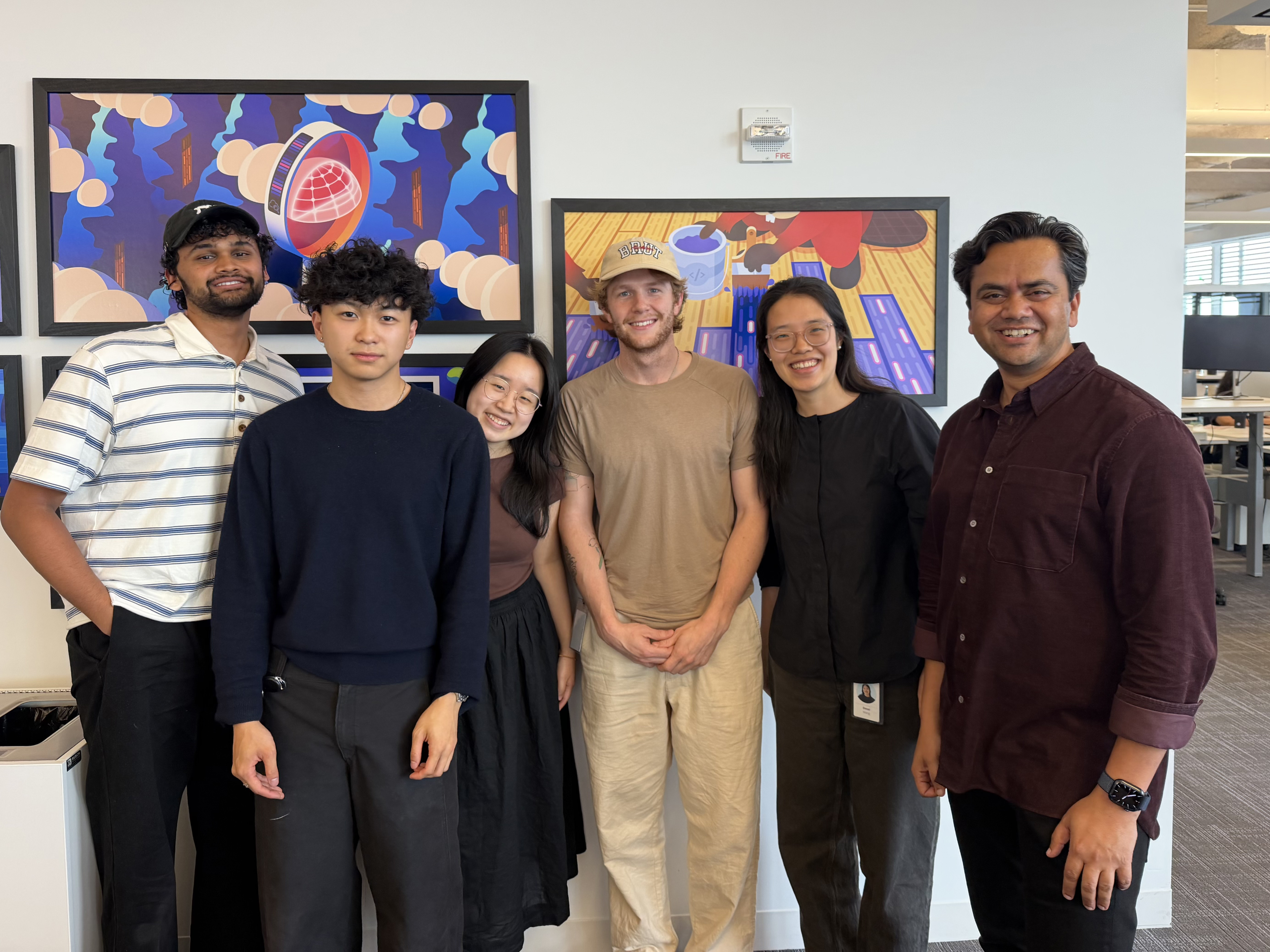
My current cohort has 5 designers, though I believe cohorts can range from 4–6. We are placed on separate teams, so day-to-day we work with separate engineering and product teams. That said, the cohort is very close-knit. We'll often grab lunch, work together in the cafe, and during the most recent company hackathon we even collaborated on a project.
What is Datadog?
Datadog is an observability and monitoring platform. At its core, it tracks the health of software systems — web traffic, backend databases, infrastructure, security vulnerabilities. Most of its customers are engineers, so it's a highly technical product. Understanding this matters for your application: the design challenges here are about making complex information clear and actionable, which can be a bit different from visual-forward consumer app designs.
Tip: Spend time on the Datadog Learning platform. It's free and the interactive tutorials allow you to play around in sandbox environments. The Core Skills tutorials helped me a lot so I recommend starting there :)
What's my interview process?
Here's what mine looked like, but your rounds and format may be different. I went through 3 rounds:
Recruiter call. 30 minutes. I gave a short self-introduction and a brief 5 minute project overview. My call was on Zoom so I also showed some visuals while talking about my project. The recruiter also walked me through the program logistics and answered my questions.
Portfolio walkthrough. 50 minutes. I used 15 minutes to present one case study in depth — the problem, how I approached it, my impact. The hiring manager also asked follow-up questions, so I talked more about my design process and some challenges I faced.
Whiteboard challenge. 50 minutes. For my interview, I received the prompt in advance. However, rather than coming up with one set solution, I tried to understand the question and some possible directions. The interview is a dialogue with the interviewer, so I was prepared to change my approach based on additional information I received. I also made sure to ask clarifying questions, show my process, and explain my reasoning as I went.
How I made my portfolio stand out?
Show complex problem-solving, not just polished visuals. Datadog is a deeply technical product. I think what matters most in a portfolio is showing that you can handle information-dense, niche, or ambiguous problems. Great visual design is a plus, but I made sure to show that I know how to work in complex domains.
You don't need B2B or enterprise experience. This is an early-career program, so it's understandable that you haven't worked in a company like Datadog. I didn't have traditional product design experience when I applied, so I don't think it's a hard requirement. What I believe matters more is demonstrating core product design skills: a clear design process, intentional decision-making, and evidence that you can understand users and deliver impact.
Lead with impact. Recruiters spend very little time on each project, so I made sure my openings (title, subtitle, first visuals) immediately answered what I did and what my impact was. I like to think of my portfolio like an elevator pitch rather than detailed case studies. There's plenty of time to talk about details in the portfolio presentation round.
One last thing: in my opinion, communication is a key differentiator. A common trait across my cohort is that we are all effective communicators and great storytellers. Think about why some project write-ups are compelling and others aren't, even when the work itself is similar. Storytelling is very important!
How important is AI fluency at Datadog?
Very! Our SVP of Design Anshuman launched an internal initiative called "Own the Polish" that requires each designer to push at least one PR to production code, so there are a lot of resources at Datadog to help designers code with AI tools. We also frequently use AI to conduct research and create prototypes, so it would be nice if you could show how you've incorporated AI tools into your design workflow.
A few things to keep in mind:
Focus on processes rather than a specific tool. At Datadog, employees can use Claude, OpenAI, Gemini, Cursor, and more. The workflow matters more than the software.
Don't just say "I love AI." I think what actually makes an impression is a thoughtful answer: how have you used it, when do you not use it, and how has it changed your workflow? Being critical of AI is also fair. I've been trying to push back on using it too early in the design process because it can limit the solution space. Having a nuanced take probably lands better than enthusiasm alone.
Coding ability is not required. I came in with an engineering background, but I don't think that's a requirement. My cohort is incredibly talented but in different areas. While I might lean toward design-engineering, there are others who excel in visual design or user research. That said, if you can code, I would highlight it as a strength. If you're interested in shipping code to production, you can read about how I've designed and shipped a color update during my first rotation here. Katrina has also written about her experience working directly in code as a designer.
What's it like to work there?
Embedded in a product team. Each designer works directly within a team of 5–10 engineers, an engineering lead/manager, and a product manager (PM). You're part of the team building the product, which means you have real ownership! However, know that shipping to production at a large company takes patience and trust-building.
Research is growing. Datadog has a small research team, but they're actively growing. In the meantime, designers are supported in running their own research through surveys, user interviews, and usability sessions. Because Datadog uses its own product internally, a lot of useful signals are also gathered from internal users. RUM (Real User Monitoring) data is another resource designers can tap directly.
Mentorship. You'll be paired with a mentor (a Senior Designer) and a buddy (a PD1 or PD2). My mentor has been awesome — she sits near me, has deep knowledge of the product domain, and is always willing to give feedback or point me toward useful references. The buddy relationship is more informal: someone around your level who you can ask candid questions and get a real sense of the company from. Beyond those relationships, design teams hold weekly crits where you share work and get feedback from the broader group. Overall, the level of design craft at Datadog is high and there's a lot to learn from the designers around you.
Great culture. In my experience, Datadog is highly collaborative. I've had good work-life balance, and I've found my teammates to be kind and helpful. The design team is also amazing, and I'm grateful to be surrounded by people who genuinely care about design craft.
Application logistics
- Apply as early as possible. The program receives a lot of applications, so apply ASAP! You can find the official ADP page here.
- Referrals help. If you know anyone at Datadog, ask for a referral. It gets you past the initial stack of applications.
- Resources: Guo has great articles about what it's like working at Datadog (internship, first 1.5 months). The Design Meetup newsletter is a good resource for early-career design opportunities. Brandon, one of the leads of Design Meetup, is also in the ADP program.
If you have a specific question I didn't cover, feel free to message me on LinkedIn. Best of luck!